


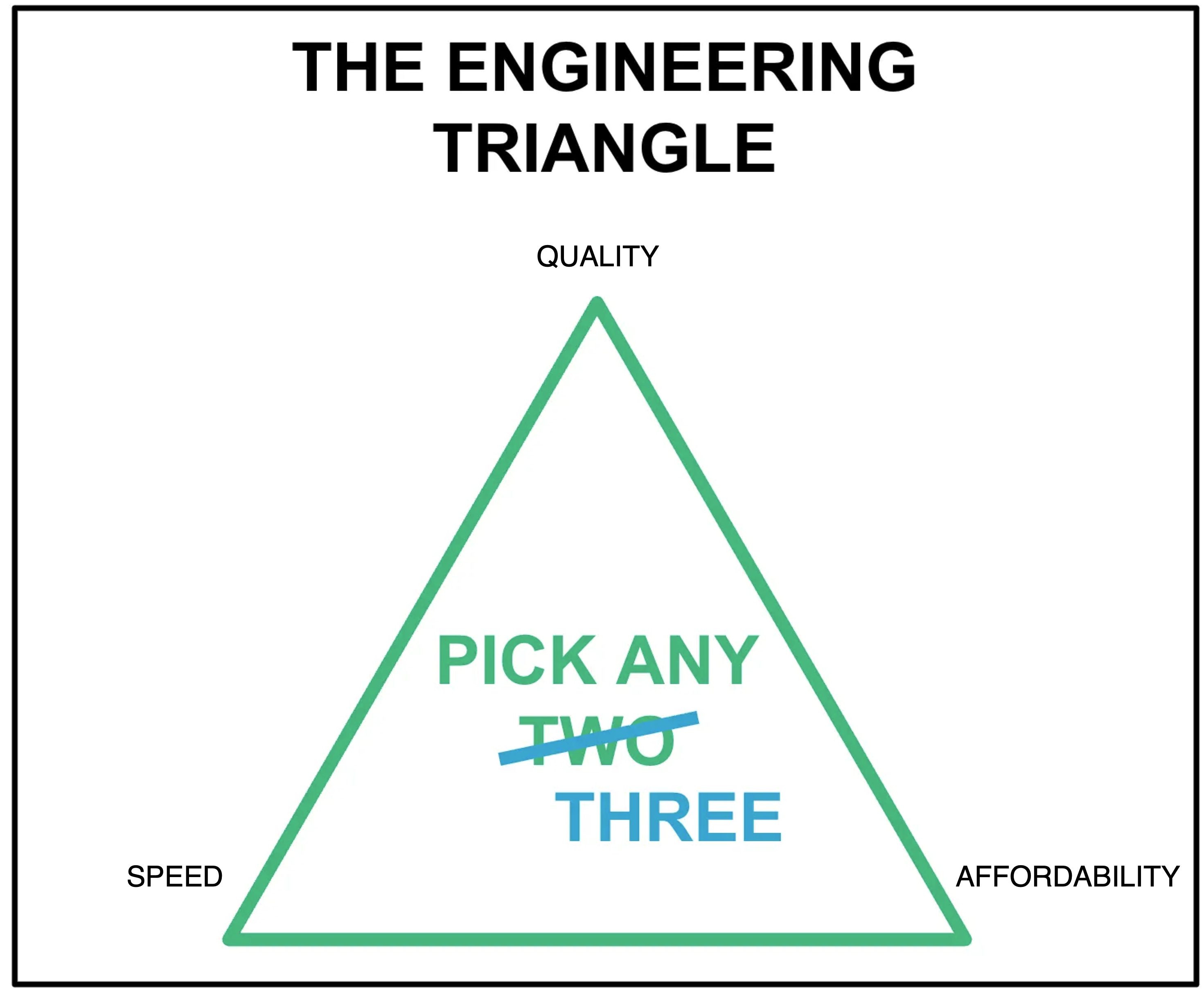
“Better. faster. more. Pick three”
AI is beginning to break the ‘engineering triangle,’ reshaping how enterprise engineering teams build. In software-centric domains, AI thrives on structured languages, compilers, and near-instant feedback loops – enabling teams to iterate in seconds and innovate rapidly.
Electronics design has followed a very different trajectory.
AI adoption among hardware teams has been slower, not because engineers are resistant to change, but because the domain itself is unforgiving. Feedback loops take weeks, physical builds are required to validate decisions, and reliability is non-negotiable – a single missed error can trigger costly respins and months-long delays.
Those constraints are real, but they point to a deeper limitation.
Until recently, electronics design lacked a computable foundation that AI could reliably reason from. Component catalogs, datasheets, ECAD schematic symbols, and tribal knowledge were fragmented across websites, PDFs, and tools – never structured in a way machines could learn from or apply consistently. As a result, early AI attempts in electronics struggled to deliver trustworthy results.
That limitation is now being removed.
At Circuit Mind, we’ve developed advanced component digital twins that make it possible to encode the behavior of electronic components – their electrical characteristics, interfaces, and relationships – into a form that AI and algorithms can reason over.
In this article, we examine the evidence behind that shift: peer-reviewed evaluations and real-world engineering programs showing AI-powered automation delivering measurable gains in design speed, exploration, and verification – without sacrificing rigor.
Reducing Electronics Design Cycle Time, Without Sacrificing Rigor
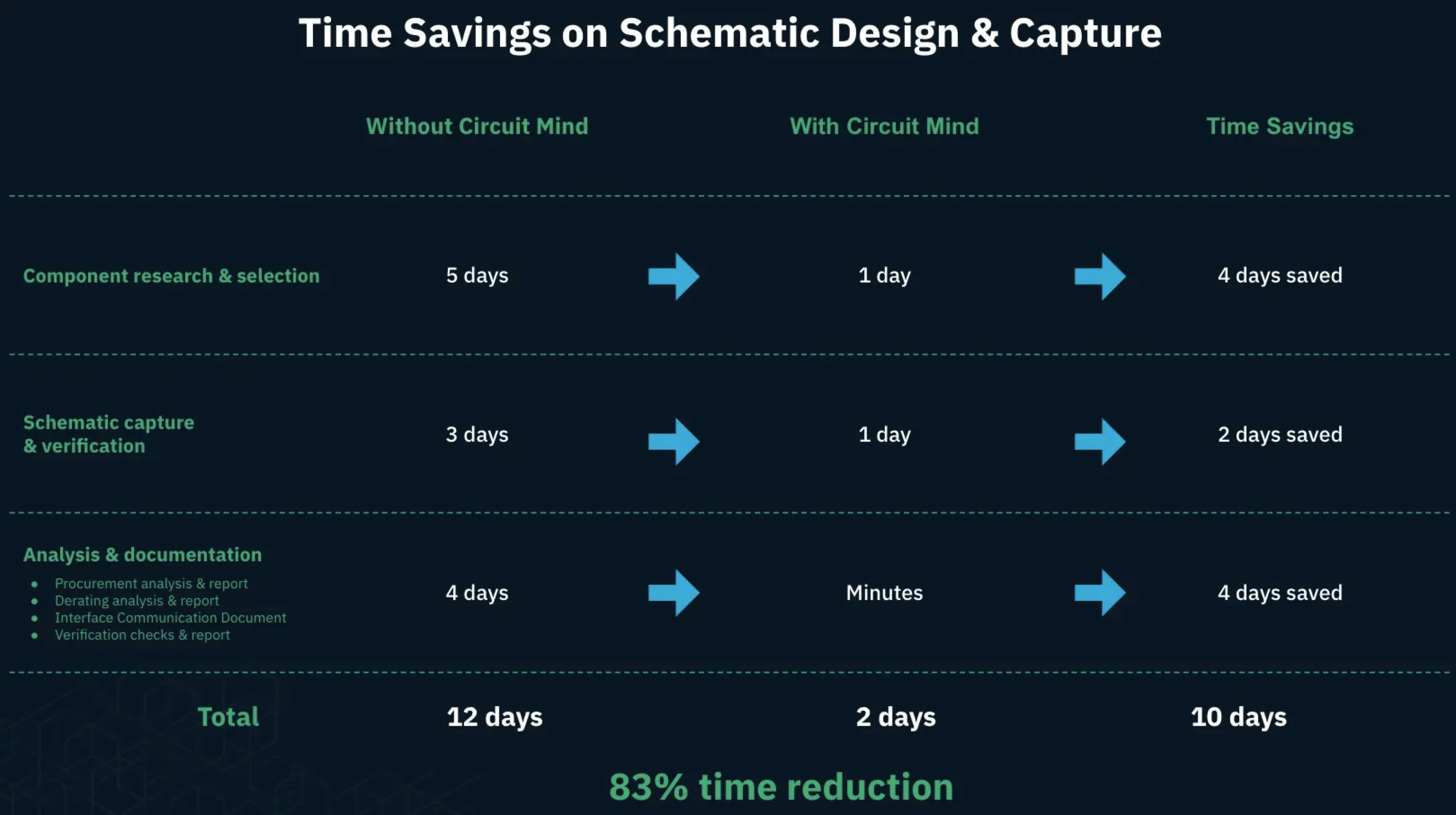
AI is compressing the amount of manual work between requirements definition and a complete schematic package, without compromising engineering rigor.
Evidence: Los Alamos National Laboratory compressed weeks of PCB design work to hours
Los Alamos National Laboratory (LANL), ISR-4 (Space Electronics and Signal Processing), ran a structured evaluation of Circuit Mind to determine whether the platform could fit into their PCB production flow.
For a “medium-difficulty” board, LANL benchmarked an estimated 60–80 hours of conventional (manual) design work against an AI-assisted workflow they completed in 4 hours 13 minutes – a measured end-to-end result combining setup, automated generation, and manual completion tasks.
Benchmarking LANL’s design process
- Typical Time Spent on Manual Design: 60 – 80 hours
- Time Spent with Circuit Mind: 4 hours 13 minutes
- 𝑇𝑜𝑡𝑎𝑙 𝑇𝑖𝑚𝑒 = 𝑆𝑒𝑡𝑢𝑝 𝑇𝑖𝑚𝑒 + 𝑆𝑜𝑙𝑣𝑒 𝑇𝑖𝑚𝑒 + 𝑀𝑎𝑛𝑢𝑎𝑙 𝑃𝑜𝑠𝑡 𝐴𝑢𝑡𝑜𝑚𝑎𝑡𝑖𝑜𝑛 𝑇𝑖𝑚𝑒
- Circuit Mind Completion Percentage: 90%
- Manual Engineer Completion Percentage: 10%
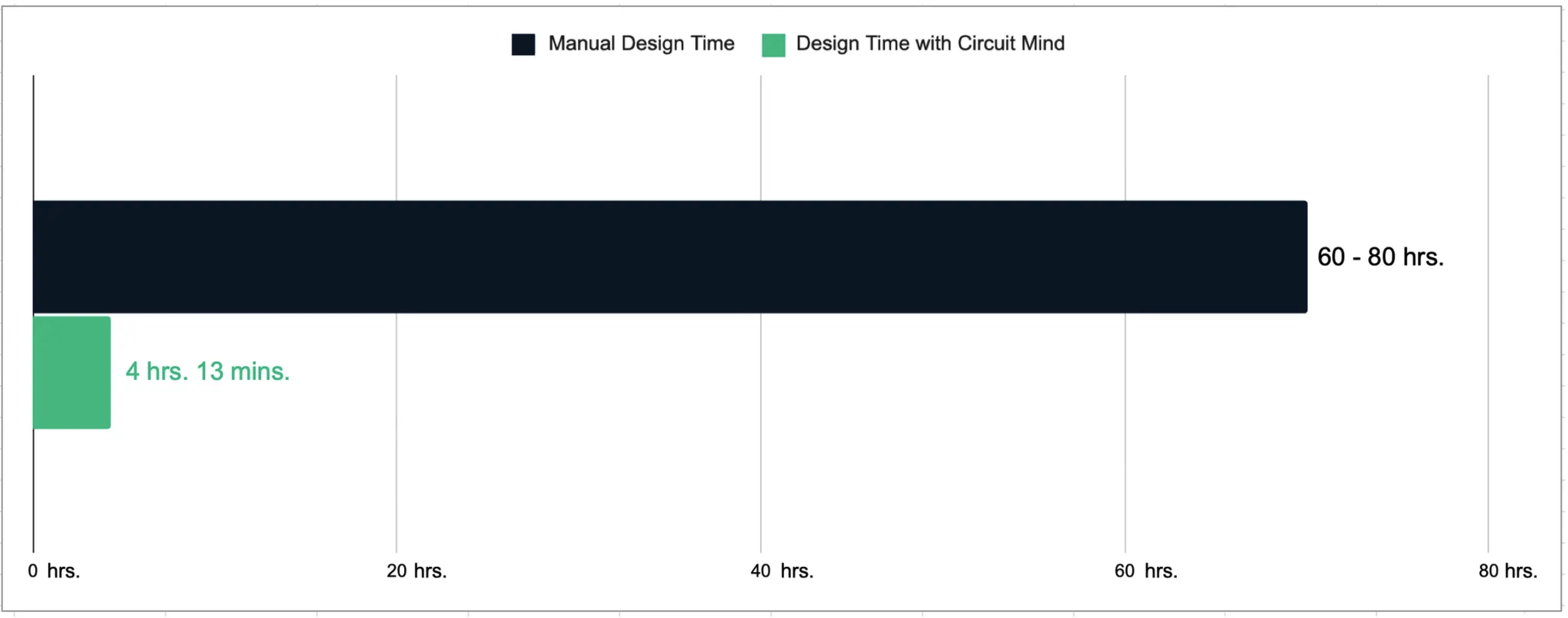
Breakdown of Time with Circuit Mind
- Setup (Block Diagram Creation): 35 minutes
- Automated Solve (Schematic, BoM, Reports): 8 minutes
- Manual Post-Automation Tasks: 3.5 hours
- Total design time with Circuit Mind: 4 hours 13 minutes
Report Generation Time Saved
The following reports were automatically generated by Circuit Mind, saving the engineering team over seven weeks of manual reporting tasks.
LANL's Conclusion
"The [Circuit Mind] platform was able to complete the design in less than an hour, saving a lot of manual engineering time. After conducting the evaluation, we have determined that the platform could work in our PCB production flow."
To learn more about LANL's AI-powered workflow, and for a deeper analysis of their findings, read the LANL Peer-Reviewed Case Study.
Designing better circuits by exploring more architectures and tradeoffs
Better electronics come from exploring the design space and evaluating tradeoffs between design choices. This enables selection of the best candidate.
Evidence: APAGCoSyst used AI to explore multiple architectures to find the best cost/performance outcome
When APAGCoSyst, a global electronic design and production center, needed to respond to an EV-maker’s bid for an interior lighting project, they used Circuit Mind’s AI to evaluate multiple viable circuit architectures.
Circuit Mind enabled APAGCoSyst to rapidly explore a design space that would be impractical to research manually in the time-constraints they had. They generated three complete designs in minutes from “trillions of BoM options” explored. This exploration helped APAGCoSyst prioritize value and competitiveness without sacrificing technical feasibility.
APAGCoSyst selected the most cost-optimized design saving 32% - 43% compared to the other architectures explored.
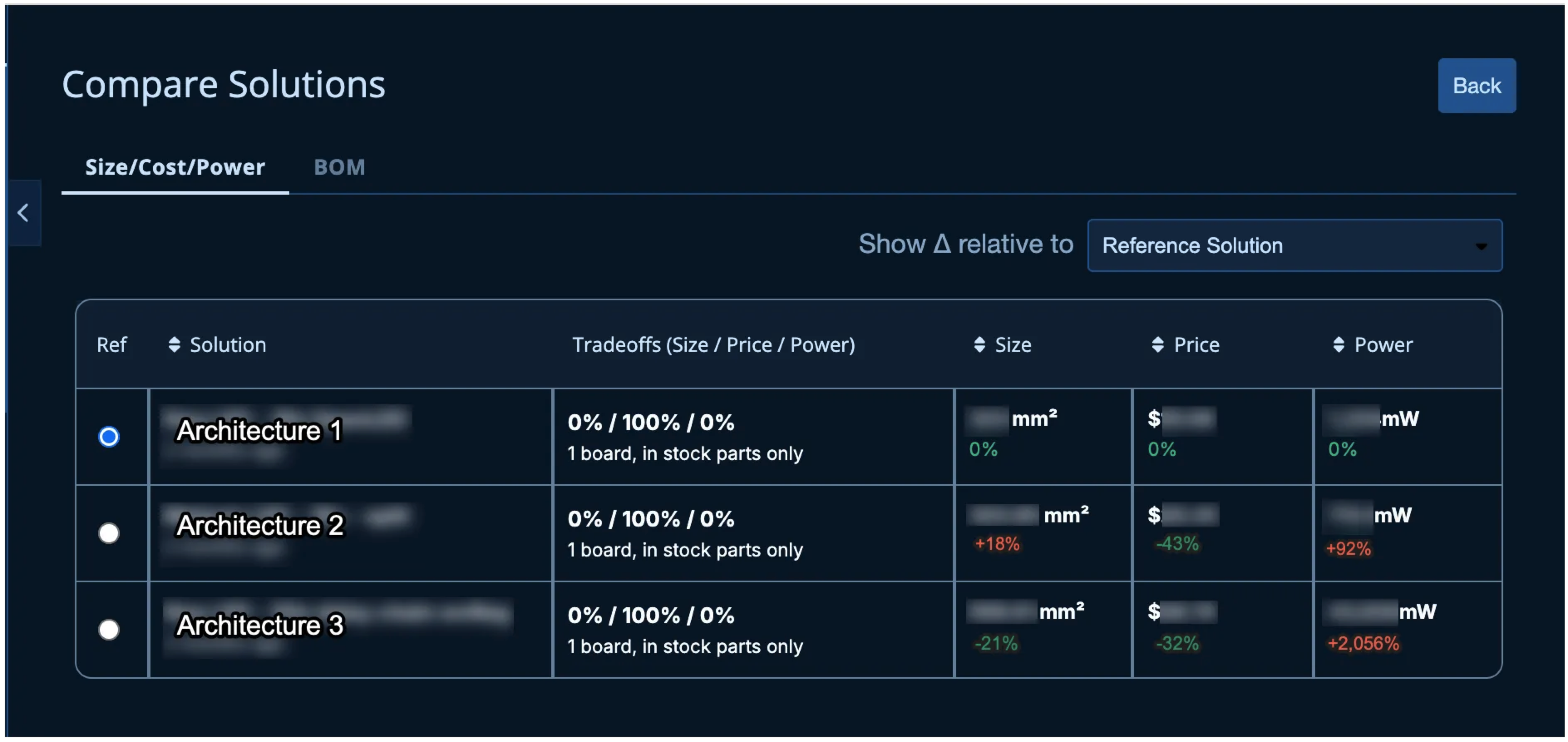
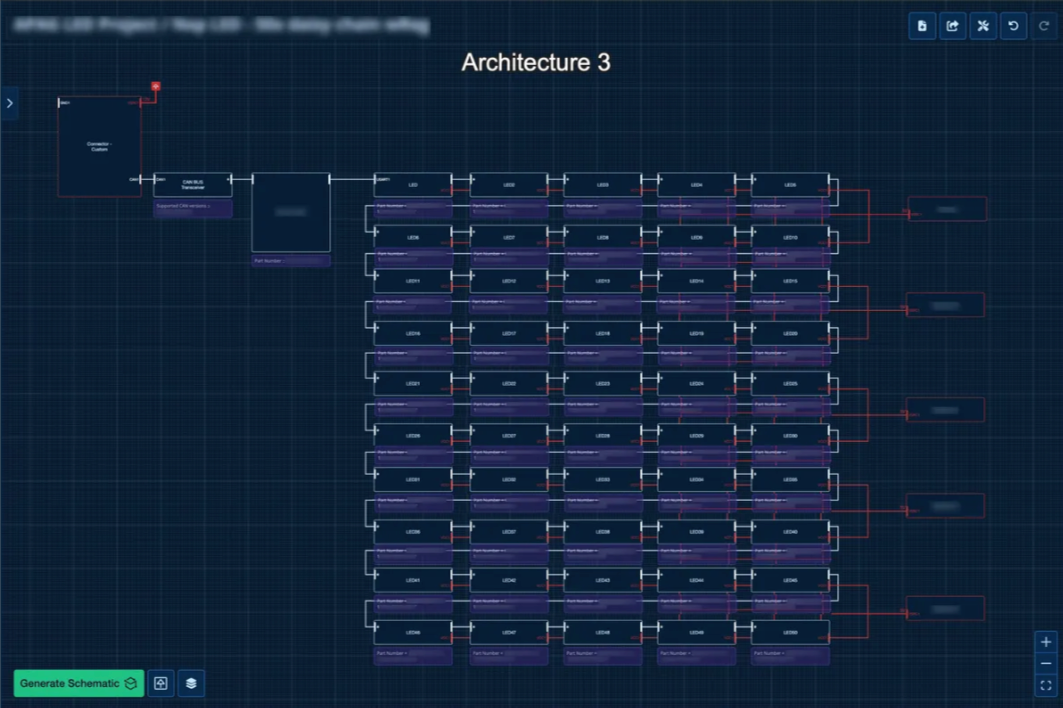
Each architecture was first modeled as a block diagram in Circuit Mind, to capture requirements for each functional block:
Architecture 1: A simple fan-out design where individual LED drivers independently power each LED channel.
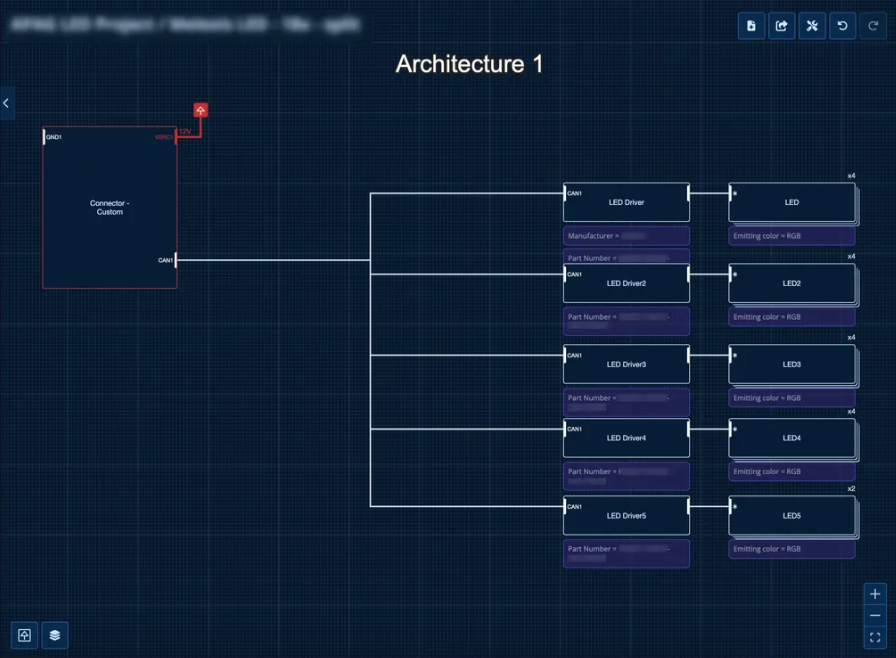
Architecture 2: A CAN-based architecture with centralized control driving multiple LED channels through shared driver circuitry.
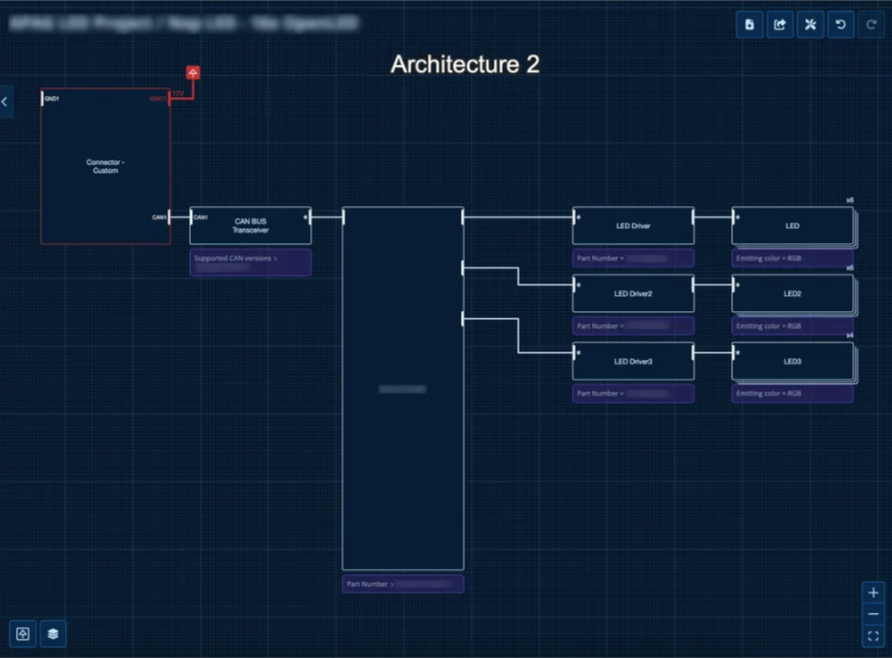
Architecture 3:A highly scalable, centrally controlled CAN architecture that supports a large number of LED channels from a single system.
Design 1st selected the most cost-optimized design, saving 32% - 43% compared to the other architectures explored.
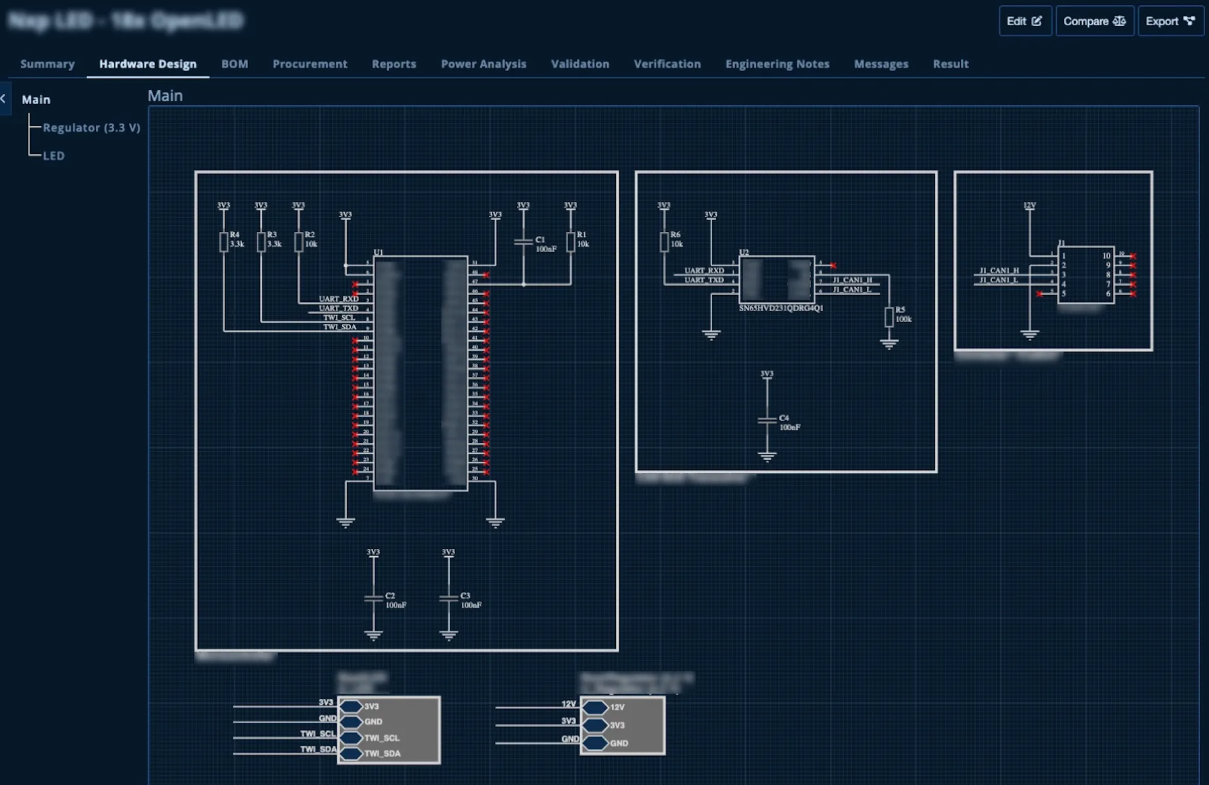
Automated Schematic and BOM Generation
For each architecture, Circuit Mind generated a fully functional and optimized schematic and BOM in minutes, for the digital and power portions of the circuit design. Bernhard Edlinger, the Hardware Team Leader, at APAGCoSyst, chose the best design to move forward.
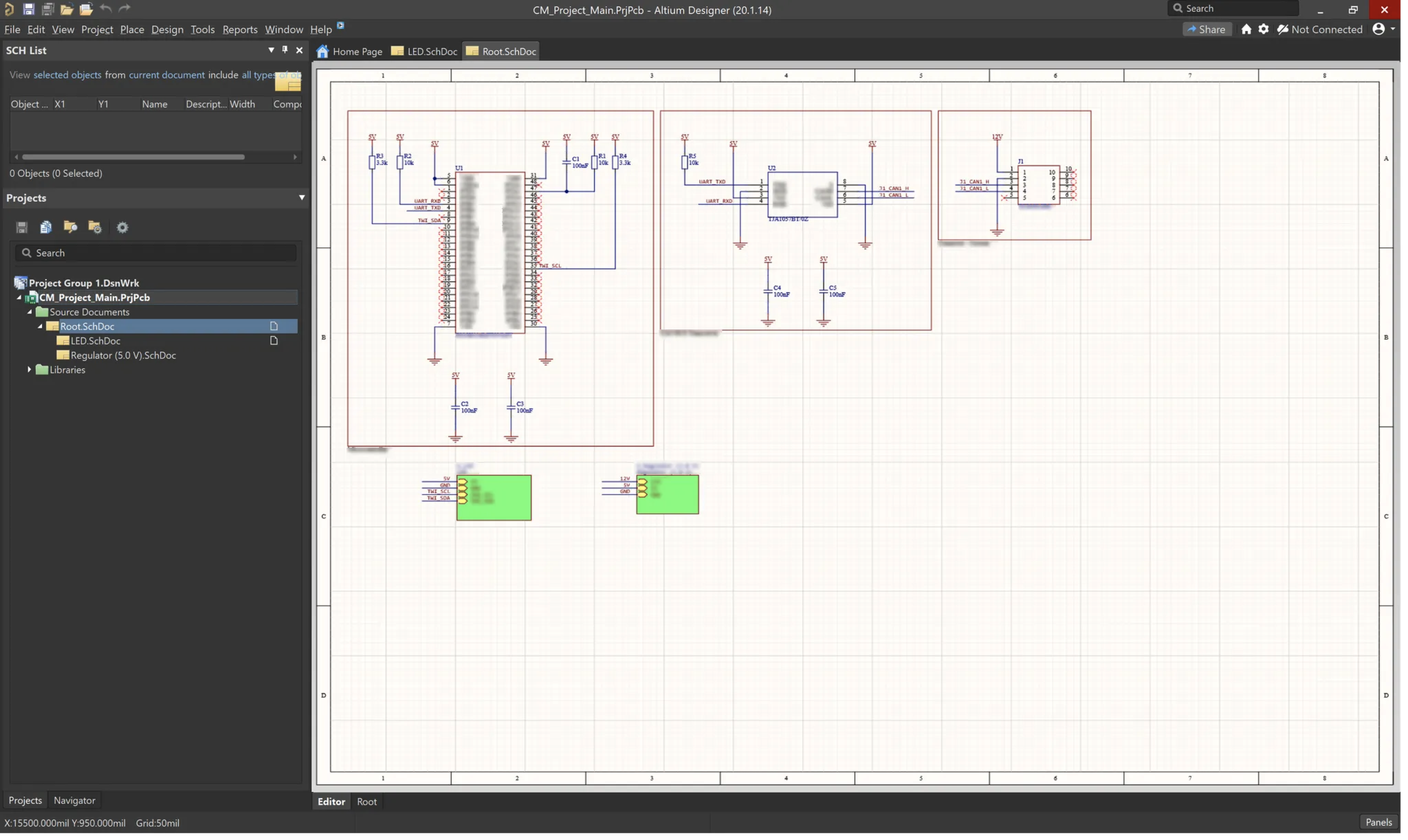
Export to Altium for Sharing with the Customer
The chosen schematic design was exported to Altium, complete with project files and symbols. These files were shared with the customer as part of the RFQ, helping APAGCoSyst demonstrate expertise and attention to detail, going above and beyond what is expected with a typical RFQ response.
Read the full APAGCosyst Case Study to learn more about their AI-powered design workflow.
Increasing prototyping and design throughput
When early design work takes days instead of weeks, teams can evaluate more ideas and build more prototype-ready designs.
Evidence: Design 1st enabled more candidate designs for rapid prototyping
Design 1st, a leading product design firm, used Circuit Mind to accelerate rapid prototyping for a precision wellness device concept, using AI to evaluate more design candidates early in the development process.
“Our clients demand fast-paced innovation, with zero margin for error. We envisioned harnessing AI and automation as a way to enhance our leadership in product design. Circuit Mind is helping turn that vision into a reality.”
— Donovan Wallace, VP Electronics, Design 1st
Instead of committing to a single schematic direction upfront, Design 1st leveraged Circuit Mind to generate and compare multiple design options in minutes, drawn from a vast design space. This gave the team a practical way to assess approaches, using real component availability and constraints, without slowing down the prototyping timeline.
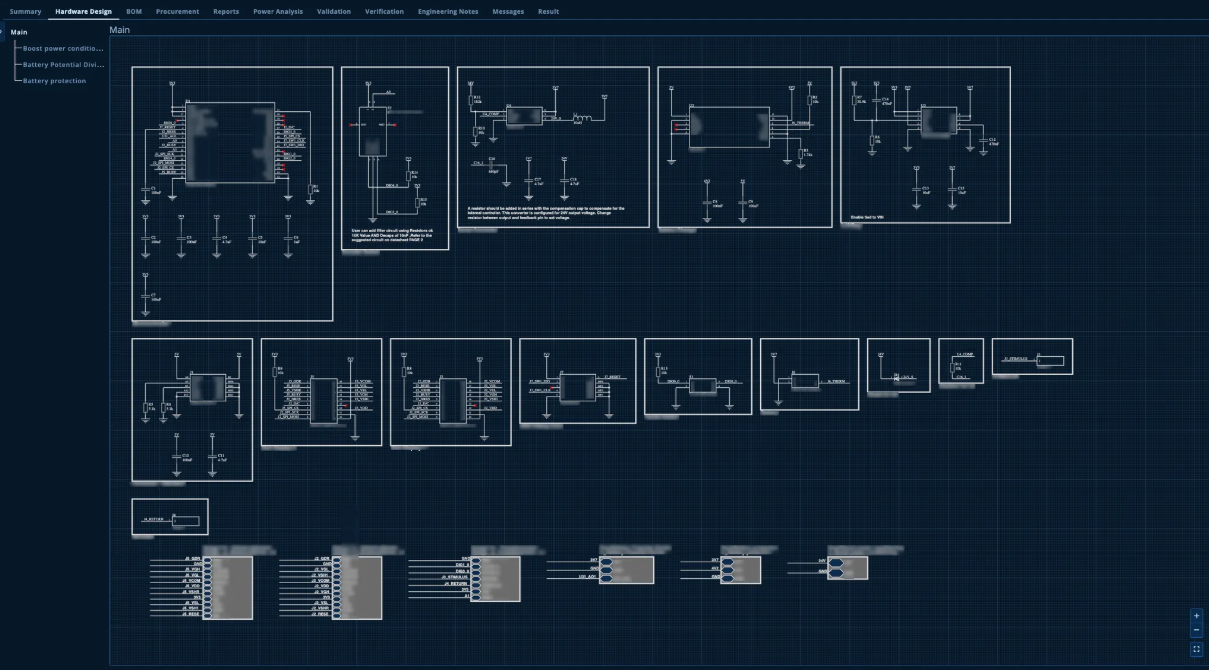
Design 1st used Circuit Mind-generated schematics as reviewable outputs that could be moved forward into prototyping workflows. Preliminary schematics were exported to their ECAD tool, Altium, supporting rapid evaluation of multiple concepts in hardware.
Read the Design 1st Case Study to learn more about their AI-powered rapid-prototyping workflow.
Conclusion: AI is Breaking Teams Free from Traditional Engineering Constraints
These results show not just faster design cycles, but a shift in how AI is enabling engineers to break historical tradeoffs in electronics design.
An electronics design intelligence system can generate and validate design options from requirements in minutes, changing what teams can realistically do during the most critical phase of development:
- compress weeks of manual effort into hours
- explore more architectures
- iterate on more ideas and deliver more prototype-ready designs
Better. Faster. More.


.png)
.png)
.png)
.png)
.png)
.png)


